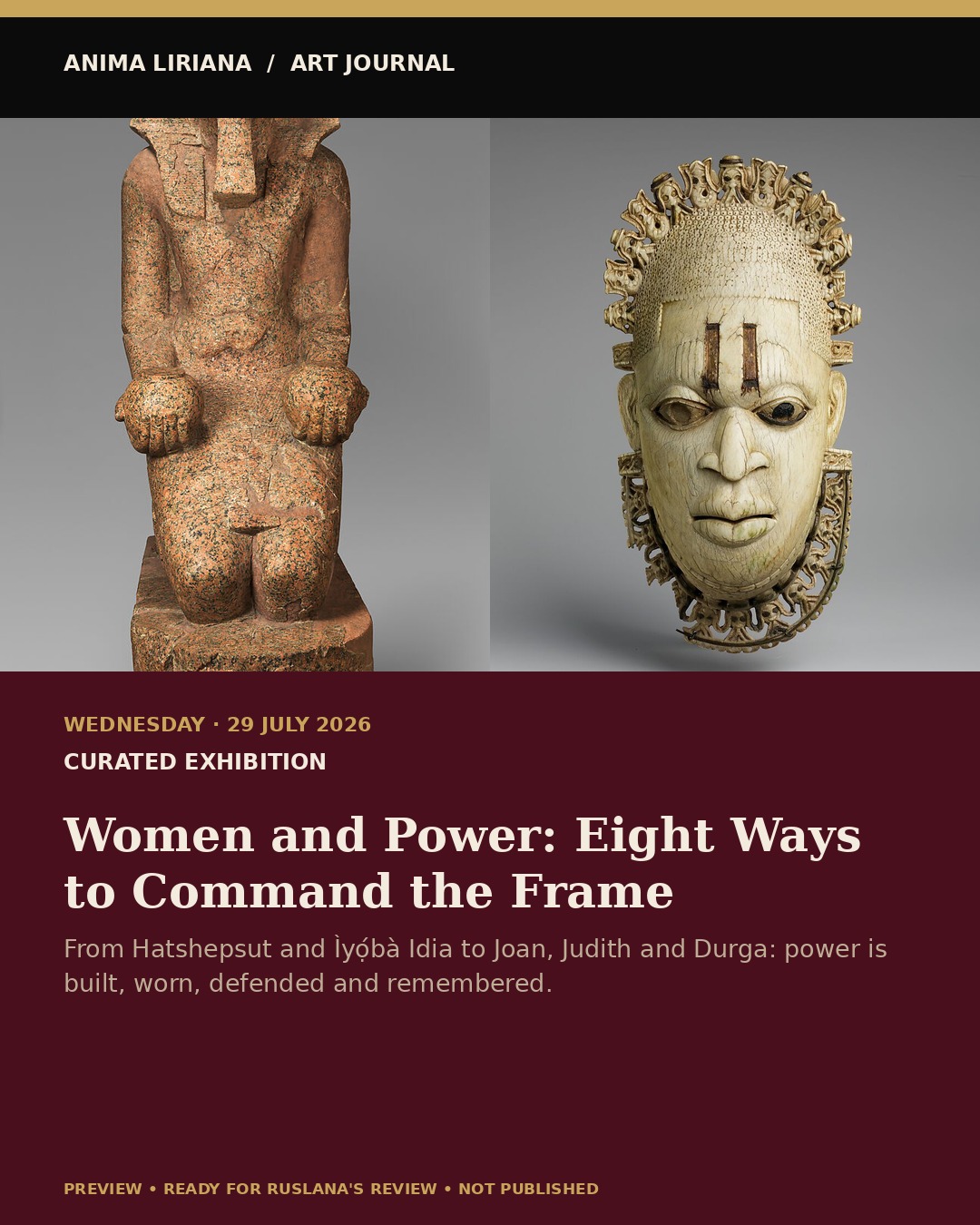
Power in art is rarely a single gesture. It can be political office, sacred protection, military action, intellectual authority, social defiance or the control of one’s own image. These eight public-domain works do not tell one universal story of womanhood. They show eight different systems in which female authority becomes visible.
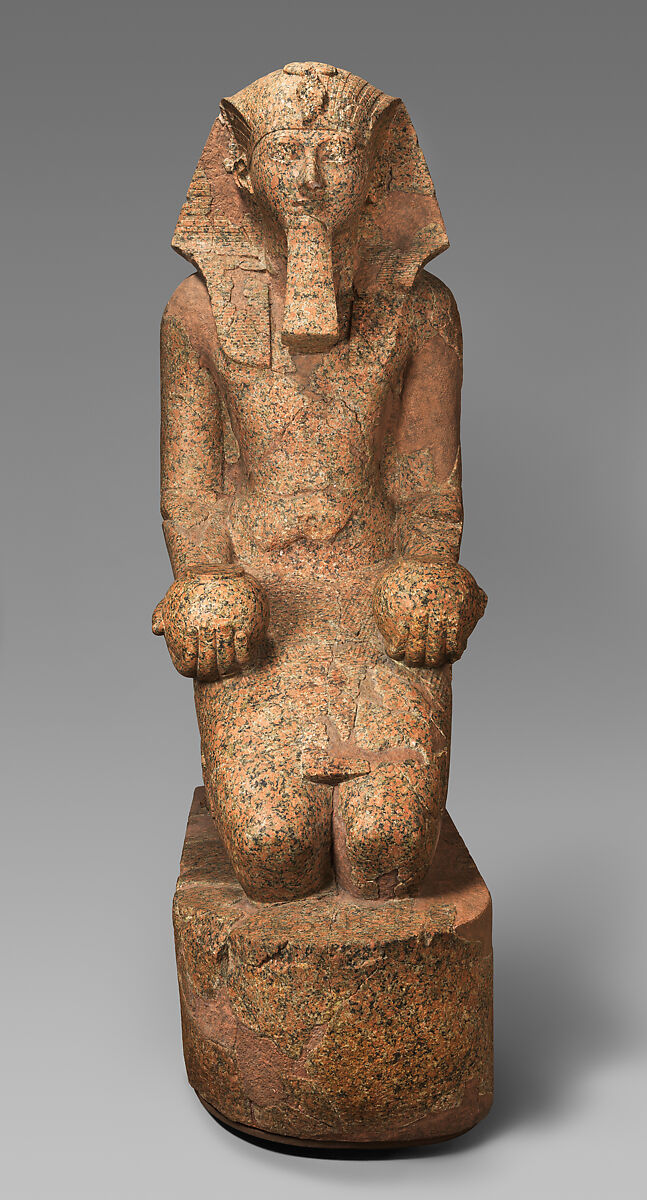
Large Kneeling Statue of Hatshepsut
New Kingdom, Dynasty 18, ca. 1479–1458 BCE · Granite.
Hatshepsut appears in the visual language of an ideal Egyptian king. The kneeling pose is devotional, but the colossal scale is unmistakably royal. Gender is absorbed into the office of pharaoh: the sculpture makes rule itself the primary identity.
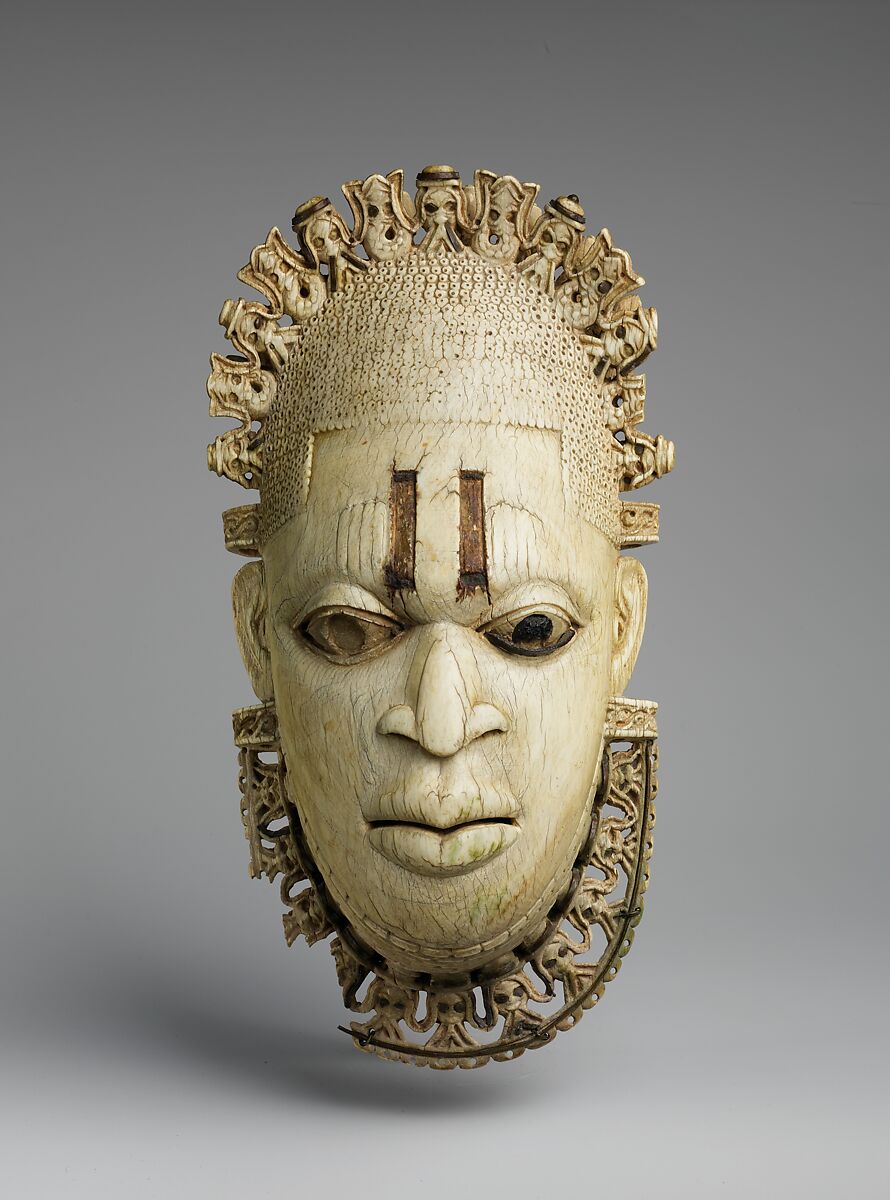
Pendant Mask of Ìyọ́bà Idia
Edo peoples, Court of Benin, early 16th century · Ivory, iron and copper.
Made for Oba Esigie to honour his mother Idia, the mask connects maternal status with dynastic survival. The Met notes that images of women are rare in Benin court art, yet this object has become a powerful emblem of the kingdom’s continuing legacy.
Joan of Arc
Jules Bastien-Lepage, 1879 · Oil on canvas.
Joan stretches forward as visionary figures emerge behind her. Bastien-Lepage refuses the tidy pose of a conventional heroine. Her body is caught between the domestic garden and a public destiny that has already begun to claim it.
Madame X
John Singer Sargent, 1883–84 · Oil on canvas.
Virginie Gautreau’s sharply profiled body and black dress form an image of self-fashioned social power. The portrait caused scandal at the 1884 Salon, yet its control is the point: the sitter does not invite familiarity. She occupies distance.
Judith with the Head of Holofernes
Massimo Stanzione, ca. 1640 · Oil on canvas.
Judith’s victory is represented after violence rather than during it. Stanzione gives her composure, elegance and an upward gaze. The severed head is evidence; her stillness becomes command.
Durga Slaying Mahisha
Bangladesh or India, 12th century · Argillite.
Sixteen arms produce a field of concentrated motion. Each weapon intensifies Durga’s role as the force able to defeat what the assembled male gods could not overcome individually. Sacred power is shown as coordinated multiplicity.
Sphaera Civitatis: Elizabeth I
Anonymous British artist, 1588 · Engraved frontispiece.
Elizabeth’s cloak spreads across a diagrammed civic globe. The image turns political theory into costume: the queen’s body sits at the centre of an ordered state.
Bronze Bust of Minerva
Roman, 1st–2nd century CE · Bronze.
Helmeted Minerva joins wisdom, strategy and state religion. Her authority is not brute force. It is disciplined intelligence — the kind of power that wins before the battle begins.
Which work feels most powerful — and is that power located in the body, the gaze, the object, the story or the institution behind it?
SOURCES & IMAGE STATUS
All selected records are from The Met Open Access collection and are available for unrestricted commercial and noncommercial use. Checked 26 July 2026.